

OpenClaw vs NemoClaw: Choosing the Right AI Agent Architecture

Written by Crexed
April 10, 2026
Choosing the right agent architecture depends on your use case.
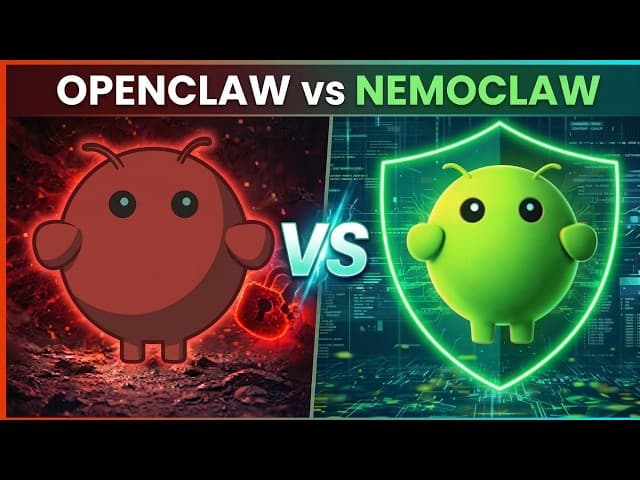
OpenClaw and NemoClaw represent two different philosophies: control vs adaptability.
The comparison below is meant for builders and leaders: enough detail to align on trade-offs, plus a short framework so you don’t debate labels you decide execution style, risk tolerance, and observability needs.
Core Difference
OpenClaw focuses on deterministic execution, while NemoClaw prioritizes adaptive reasoning.
Side-by-Side Comparison
Execution Style
OpenClaw is structured; NemoClaw is dynamic.
Reliability
OpenClaw is highly predictable; NemoClaw is flexible but variable.
Use Cases
OpenClaw suits automation; NemoClaw suits exploration.
When to Use Each
Use OpenClaw
When building production-grade systems requiring strict control.
Use NemoClaw
When solving complex or undefined problems.
The Hybrid Future
Modern systems often combine both approaches, using OpenClaw for execution and NemoClaw for planning.
Example: Hybrid Agent for Customer Operations
A strong pattern is to use NemoClaw for “thinking” and OpenClaw for “doing.” For instance, a customer-ops agent can explore the best resolution strategy (replacement, refund, escalation) and then hand off the final action to a strict executor that performs only validated tool calls.
A Simple Decision Framework
Choosing an architecture is less about ideology and more about risk, ambiguity, and operational constraints. Use the following questions to pick the right default for a workflow.
Is the task ambiguous?
If yes, prefer NemoClaw-style planning or a hybrid approach.
Is the action high-risk?
If yes, prefer OpenClaw-style execution with approvals and strict schemas.
Do you need auditability?
If yes, ensure both planning and execution are logged with structured traces.
Conclusion
OpenClaw and NemoClaw are complementary. Use OpenClaw where reliability and policy control matter most, NemoClaw where exploration and adaptability are essential, and combine them when you need both: creative planning and safe execution.